I’ll be the first to tell you I’m no expert in grief counseling. I can’t hand you a tidy set of instructions for surviving the loss of someone you love. I know what happened to me after losing my husband in 2020. Another person’s grief may ask something entirely different of them.
I was alone and drowning.
Decisions loomed everywhere, and I could barely think. The life we had built together still needed tending, even though one of its caretakers was gone. Bills arrived. Moving boxes waited. Morning kept coming, whether I had slept or not.
I seemed to do every single thing I had been told not to do. Some decisions had deadlines. Others were made through tears, with the information and strength I had at the time. Somehow, through all of it, I began to make my own way.
In those early days, instinct often carried me when clear thinking couldn’t.
I ate when I was hungry. When I was cold, I found a cozy blanket and pulled it around me. I slept when exhaustion finally caught up with me, and I kept the Kleenex box close when I needed to cry.
Those small acts felt manageable. I couldn’t solve widowhood. I could find a blanket. I couldn’t make sense of the rest of my life. I could get something to eat.
Little by little, I learned to pay attention to the person who was still here.
Me.
That was harder than it sounds. So much of my attention had been devoted to my husband, especially during his illness. After he died, there were still a thousand things to handle. Remembering that I needed some care took practice.
If I have any advice to offer from my own experience, it would be this: listen gently to yourself. Notice what hurts. Notice what offers a little relief. Give yourself permission to respond to those needs without turning them into another assignment you must complete perfectly.
If company comforts you, invite your besties. Let someone sit at the kitchen table. Tell the old stories. Say his name. Share a meal, even if all you can manage is something simple.
If quiet is what you need, let the house be still for a while. Close the drapes. Turn off the television. Rest without feeling obligated to explain the afternoon to everyone who calls.
Your needs may change. You may want solitude in the morning and a familiar voice by supper. You can pick up the phone again. You can tell a friend, “I thought I wanted to be alone, but could you come over?”
There will be plenty of times you may have no idea what you need.
I remember being that lost. When every choice feels too large, even answering “What can I do?” can be difficult. It is okay to say, “I don’t know. Will you sit with me while I figure it out?” A trusted friend, a grief group, or a counselor can help as you find your way.
For me, learning to live again happened in the ordinary moments. A meal. A nap. A conversation. Something growing in the garden that needed my attention. Over time, there were moments when I could enjoy what was in front of me, and eventually, days I looked forward to.
I couldn’t have imagined those days at the beginning.
From where I sit now, I wish I could offer someone whose loss is still new a little of that hope. You may be looking at a future too large and unfamiliar to consider. For now, bring your attention a little closer.
Are you hungry? Are you cold? Would a little company help?
Be still long enough to hear the answer, if you can. If you can’t, let someone who cares help you with the next small thing.
I found my way one need, one decision, and one day at a time. Some days, the next thing was simply pulling the blanket a little closer. That’s what cozy blankets are for.
Just know this for sure.
Everything will get better, one day at a time.
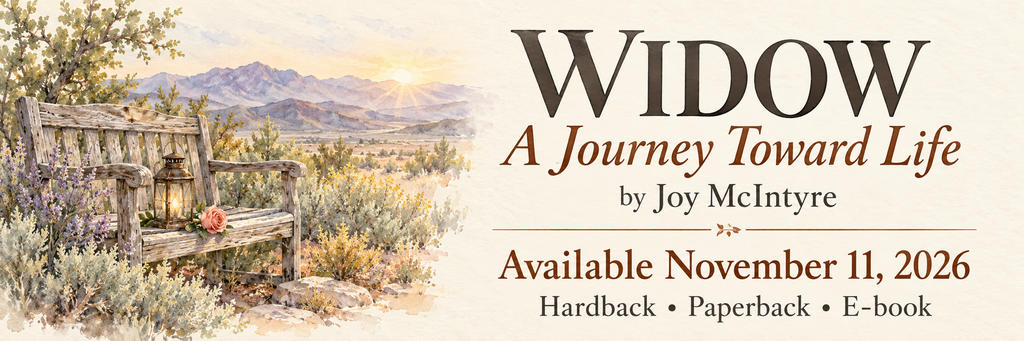
Please click on this banner to pre-order your E-book.