
Looking back at my planner for the week of April 20, I still marvel at how many loose ends needed tying—selling, buying, packing, moving. Life didn’t pause for grief. And with Covid weighing heavily on everyone’s mind, there were no casseroles left quietly on the porch, no flowers behind a ringing doorbell. There was just me—a brand new widow, pulling on her boots every morning and doing what had to be done. And that’s exactly what I did.
VST and I had a standing joke—more mine than his. I always believed I would go first. During miles in the RV debating it, we turned it into competitive banter. I had my reasons—those inconvenient vaso vagal episodes that sent me to the emergency room at the worst times. VST, on the other hand, had quieter struggles, like the slow creep of arthritis. In my mind, he would be the widower.
So naturally, I counseled him—not about Grief, but about casseroles.
My first bit of advice was simple: watch the container. Some casseroles arrive in disposable pans—bless those people. Practical, thoughtful souls who know you won’t have the energy to wash and return anything. These are the friends who truly understand.
Then there are the others—the ones who arrive with their finest stoneware. Now that’s a different story. I told him to take note. How are they dressed? How are they speaking? Are they brushing lint off your three-day-old shirt? Is there… cleavage involved? Because that dish isn’t just a dish. It’s a placeholder. A reason to come back. And if there’s a phone number written on the bottom—with a heart—well… that should not go unnoticed.
We would laugh, always circling back to the same name. “Don’t answer the door, VST,” I’d say. “Please. Pretend you’ve come down with something highly contagious. Hide.” Because once that door opens… It’s like bedbugs. Hard to undo.
Twelve days after VST passed, his urn—chosen so carefully, the perfect shade of blue with pewter accents—sat quietly in the bookcase. My days were packed with appointments, my mind spinning, when the phone rang.
On the other end were friends of the very best kind—gentle, thoughtful, and extraordinary cooks. “What’s your favorite meal?” they asked. “What can we bring you?”
I had been running up and down the mountain, every errand costing an hour round trip. COVID had shuttered restaurants and emptied shelves. I had food—but not that kind of food. Not the kind made with love.
“Spaghetti and meatballs,” I said.
Not even my favorite meal. But that morning, it was the one thing I wanted most.
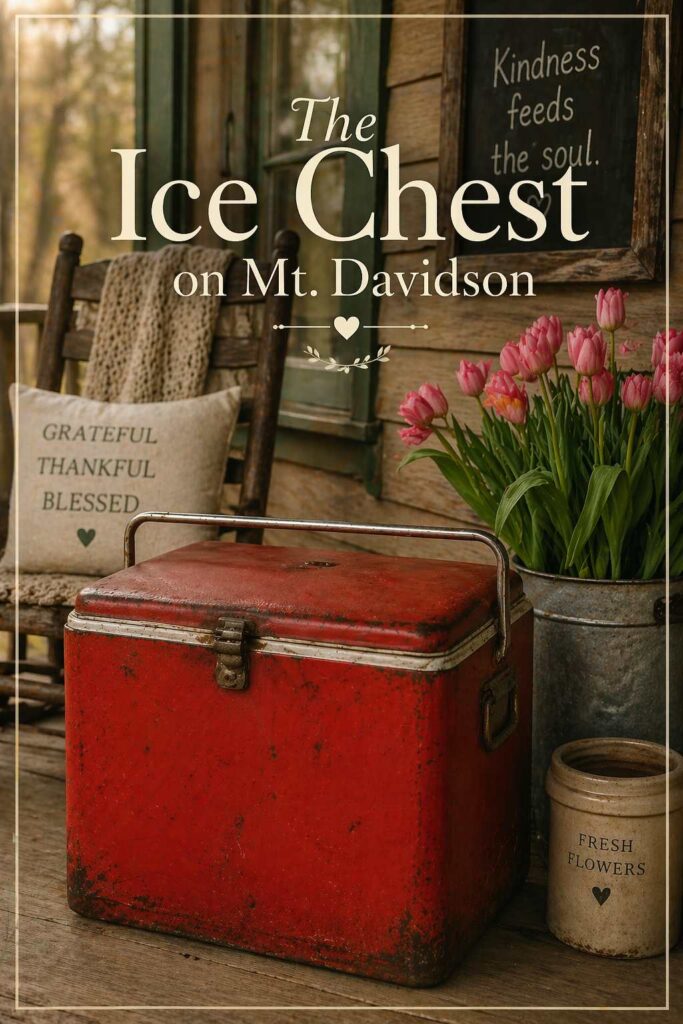
Oliver had a noon vet appointment, so down the hill we went. Two hours later, I returned to find something waiting at my door. Next to a vase of pink tulips sat a worn, brown metal container—scuffed, vintage, and familiar, like something from childhood camping trips. My friends had come.
Inside was everything. Homemade sauce and meatballs. Spaghetti cooked just right. A crisp green salad. A soft ciabatta roll. Garlic butter, carefully wrapped. Fresh Parmesan.
It was more than a meal.
It was love, packed carefully and delivered quietly.
I stood in my kitchen and cried—one of those deep, unguarded cries—because I knew exactly what I was holding. This wasn’t just food. This was care. This was friendship. This was love in its most tangible form, given by people whose hearts were breaking right alongside mine.
With every bite, memories came flooding back—Italian dinners with kids and without, candlelight meals and paper plates, a busy ranch kitchen with five hungry children asking for seconds. I could almost hear him singing O Sole Mio in that booming bass voice of his.
To anyone watching, I was just a woman eating spaghetti through her tears.
But to me, it was a feast of memory.
Today, take inventory of those casserole dishes waiting to be returned. Think about the love that filled them when you needed it most—when even remembering to breathe felt like enough for one day. Look at the names written on the bottom. Call them.
The best ones will come, collect their dish, and sit with you awhile—long enough to remind you that you are not alone.
To my spaghetti-toting friends—you know who you are. Your kindness that day helped me stay afloat. Your friendship today is golden.
I love you both.
Dear readers,
However you found your way here—from across the world or just down the road—thank you.
This little life at Winterpast is richer because you’re part of it.
I’ll be here next week, with more to share.
—Joy