
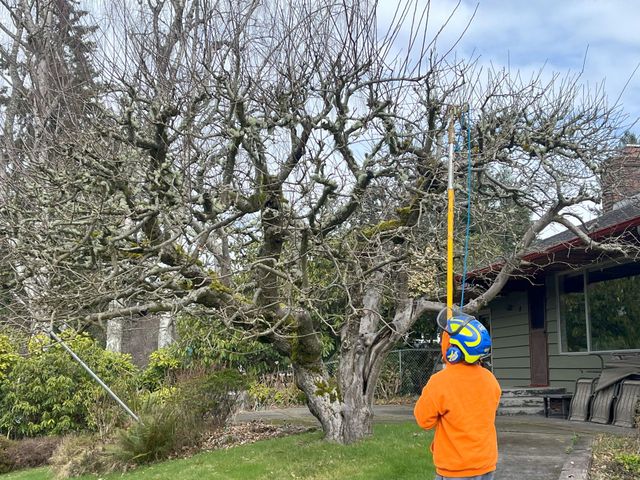
Every so often, even the most majestic specimen in the garden must face the inevitable haircut. This is the year for our banyan-like apricot tree. The birds hold conventions in it as we all consider it shade headquarters. If left unchecked, its lengthy branches were at risk of snapping in the spring winds or due to a heavy crop. Every tree professional who has entered our yard has proclaimed this tree to be an amazing specimen. She’s become our “Bark-Baby”.
As the focal point of the yard here at Winterpast, it’s not something we approached lightly with a pair of Christmas nippers and good intentions. This tree requires strategy, equipment, insurance, and possibly a helmet.

While it’s true that HHH and I own ladders and pruning tools, and we’ve watched videos, we’re also fond of our current level of mobility. There comes a time in responsible homeownership when you ask yourself, “Is this a DIY project… or a hospital co-pay?”
The answer came quickly.

So we summoned our tried-and-true Tree Doctor, Robert, the man who has saved our beloved Russian Olive from certain decline. With assessment, trimming, and nurturing the tree lived to sway another day. Since then, he’s become “our guy.”
An apricot of this magnitude requires more than enthusiasm. It requires someone who understands how to open the canopy for sunlight, how to remove crossing branches, improve airflow, and keep fruit production strong without stripping its dignity.
Professional arborists know things the rest of us guess at:
- Which limbs are structurally unsound
- How much to remove without shocking the tree
- Where to cut so the tree heals properly
- How to prevent disease from entering open wounds
- How to shape growth for future strength
- And most importantly, how to get down from high places without drama
They know all that AND haul away debris.
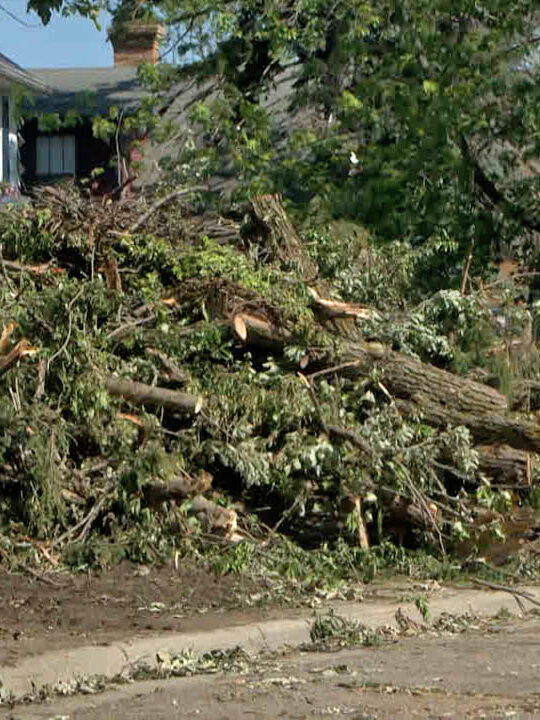
Have you ever seen the aftermath of major pruning? It looks like a small tornado has thoughtfully organized your branches into piles. There are twigs, limbs, and entire sections that seem large enough to qualify as furniture. If HHH and I attempted this ourselves, we would still be dragging brush to the landfill sometime in July. Heck, by then, we’ll have completed a couple more cruises, which are much more fun than hauling limbs and leaves.
And let’s not forget safety. Large fruit trees can have heavy limbs under tension. One wrong cut and you’re reenacting a scene from an action movie, minus the stunt double. Professionals are trained in proper rigging, ladder positioning, and safe cutting angles. They carry the right equipment and, importantly, the right insurance. Peace of mind is a beautiful thing.
When the crew of six arrived, they walked around the trees with the quiet focus of surgeons preparing for a delicate procedure. They studied the canopy, tilting their heads, while making small nods. Our only request was that we wouldn’t need to wait ten years for the tree to return to its majestic stature.

Soon, branches began to descend in a controlled and dignified manner. Light filtered through spaces that hadn’t seen sunshine in years as the balanced shape of the tree slowly emerged. Strategic pruning isn’t about shrinking a tree, but renewing it.
By the time the crew finished, the yard looked brighter and lighter. The apricot stood dignified rather than unruly. It now commands attention with elegance instead of chaos. Six other fruit trees were groomed, as well.
And best of all? No emergency room visits, loads of brush, or marital debates atop a ladder. Just healthy trees and the comforting knowledge that sometimes the wisest gardener knows when to step aside. The apricot of Winterpast breathes a little easier tonight and so do we.
