

After a week on the Central Coast of California, where the air smells faintly of salt and possibility, and the biggest choice of the day was whether to enjoy clam chowder or fish and chips. Visits with my Godmother AND the TRUE Goddess of the Central Coast enriched our time.
All wonderful until HHH and I found ourselves facing a far more serious question. Just how, exactly, were we going to get home? In spite of enjoying balmy high desert days before we left, winter isn’t through with us. We faced two choices.
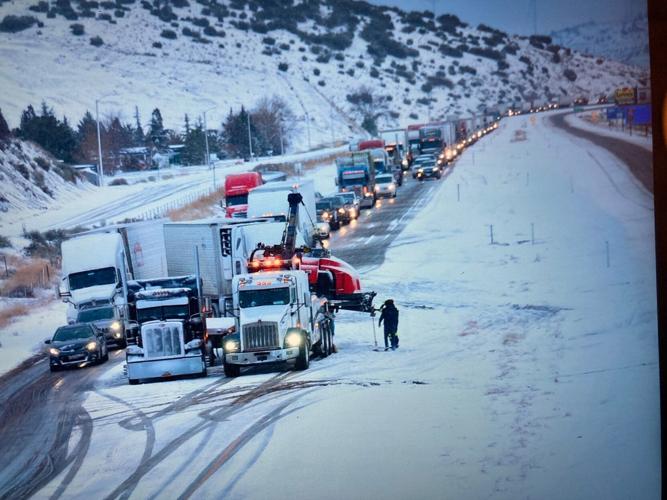
Choice #1 included braving Donner Pass in the middle of what the weather app politely described as “a significant weather event,” and what the news described as “closures and delays”. Donner is shorter, faster, and more direct. In good weather, it’s almost pleasant. But, this wasn’t good weather. Just two days before, the world lost nine lovely souls who perished in an avalanche. And then, we all remember what happened in 1846.
Choice #2 found us driving south and then east over Tehachapi Pass, and then making our way north along the longer, quieter, and gentler Eastern Sierras route. Less dramatic, we’d be the heroes in our own survival documentary.
After a week of rest, relaxation, and watching Olympic athletes do daring things at high speeds, we felt we had already met our quota for adrenaline. The choice was easy.

We packed up, and settled in for what turned out to be nearly ten hours of winter watching.
The Eastern Sierras have a way of making you feel small in the best possible way below snow-draped peaks and long stretches of open highway. Occasional gusts of wind gently nudged our vehicle just enough to remind us who was actually in charge. We drove past ranches dusted in white, frozen creeks glinting in the pale sun, and stretches of highway that seemed to go on forever.
Was it longer? Yes.
Was it slower? Also yes.

Was it peaceful knowing the interstate wasn’t closing ahead of us like a zipper? Absolutely.
There’s something about winter travel that turns even the most carefree among us into cautious planners. Before leaving the coast, we made sure our tank was full. We checked road conditions repeatedly. We told others our route and expected arrival time. It’s not dramatic—it’s just wise.

If you’re traveling in severe weather, here’s what belongs in your vehicle (besides optimism and snacks):
- A full tank of gas (half a tank is not a plan)
- Water and non-perishable food
- Blankets or sleeping bags
- Warm gloves, hats, and extra layers
- A flashlight with fresh batteries
- Phone charger (car and portable battery)
- Small shovel and ice scraper
- Tire chains if required
- Basic first aid kit
- A Bible
We didn’t need most of it, which is precisely the point. Preparedness is rarely glamorous. It’s just comforting and very smart, because you just never know.
Leaving the beautiful Pacific, the miles stretched on for almost ten hours until finally pulling into our own driveway. There, we were greeted by more snow than we’d seen the entire day. After all that careful driving, it followed us home. As the snow fell gently across Winterpast, I was reminded that storms aren’t something to conquer. They’re something to respect.
Travel has a way of teaching small lessons. This one was simple: shorter isn’t always wiser. Dramatic isn’t always necessary. Sometimes the long road is safest and safety is beautiful.
