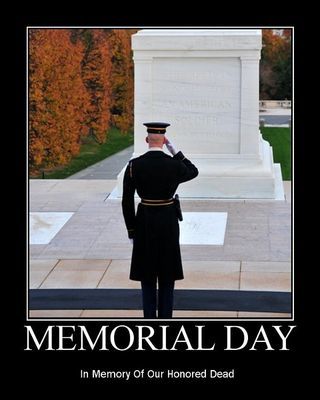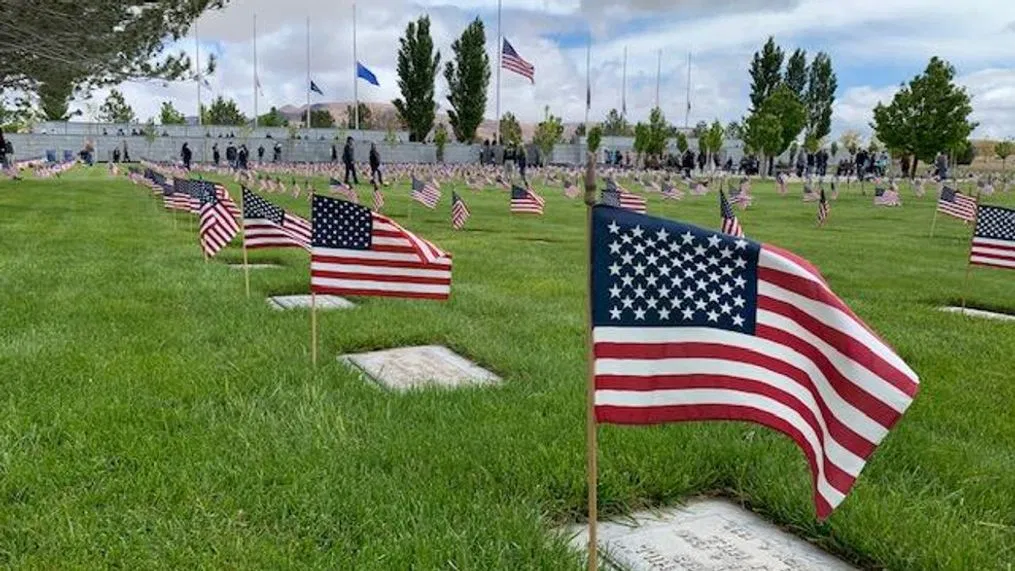
Tomorrow, in the quiet stillness of early morning, before the sun climbs too high over the sagebrush hills, a gentle procession will begin . Volunteers of all ages, families with small children, veterans in crisp caps, and Boy Scout troops holding bundles of American flags will gather at the gates of the Northern Nevada Veterans Memorial Cemetery. Each flag they will plant represents promises to remember, honor, and never forget.
Memorial Day here is not just a holiday but a sacred ritual observed by thousands who come from miles around. We are lucky enough to be home to the national Cemetery which is the final resting place for almost 10,000 veterans.
As we walk through neat rows of headstones, the silence is almost reverent, broken only by the rustle of wind across the desert and the soft flutter of flags already placed. Some stone markers are newly etched, while others bear the marks of weather and time. But each one holds a name, a story, a life that chose service above self.
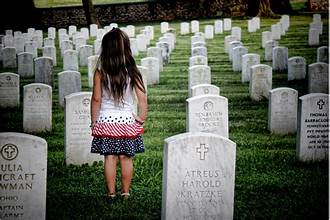
When you kneel at a gravesite, press a flag gently into the soil, and read the name engraved there—James E. Michaels, SGT, U.S. Army, Vietnam—you cannot help but wonder who he was when he was 19, or 35, or in the final moments of his last deployment. Did he love fishing at Pyramid Lake? Did he write letters home every week? Did someone wait at the kitchen window for him, long after the war had ended?
For many of us who come to place flags, this is not an act of routine patriotism. It is an act of connection. There’s a shared understanding and silent fellowship when you look into the eyes of another volunteer who kneels while remembering. Some hide their tears. Others speak aloud: “Thank you.” That’s all. Two words carried into the wind like a prayer.
This cemetery is special. Tucked away from the bustle of Reno and the casino lights of Sparks, it sits in solemn peace under Nevada’s big sky. In that vastness, something powerful happens when the enormity of sacrifice becomes intimate.
Children ask questions: “Did she fight in a war?” “Why do we put flags?” Their parents answer with stories of courage and conviction. In this way, Memorial Day becomes more than symbolic. It becomes a generational and living history passed from hand to hand, one flag at a time.
Before an hour passes, the landscape transforms. Ten thousand small American flags stand at attention in the wind, like a sea of red, white, and blue stitched into the earth. The cemetery, once still and green, is now vibrant with life and gratitude.
Finishing in silence, our hearts heavier but also lifted. To honor the dead is to recommit to the values of duty, freedom, sacrifice, and love of country. While they no longer walk among us, their presence is deeply felt.
This is what it means to remember.
So next Memorial Day, if you find yourself wondering how to truly honor the fallen, come to a place like this. Bring your hands, your heart, and a flag. You’ll leave changed.