This site uses cookies for analytics and to improve your experience. By clicking Accept, you consent to our use of cookies. Learn more in our privacy policy.
Thank you for returning to see what’s up. Unfortunately, I’m down. I’ve been fighting a winter cold for a few days now. Need to take some more Nyquil and return to bed. I’ll be back tomorrow morning to fill you in on the latest.
Sometimes the best laid plans go awry. Just when you think you have everything figured out, something like cholangiocarcinoma can throw a wrench in the works. Cancer is definitely something that can make it necessary to start all over again.
In my first days of widowhood, the goal was to breathe through the day while completing tasks written down the night before. First on my list was always “Get Dressed”. With widow’s brain fog fresh and intense, if it wasn’t written down, it might not happen.
Every day, I experienced setbacks, triumphs, shattered goals, and one reset after another. Grief does that to those left picking up the pieces. Reset I did. Each day I’d adjust my course until my head hit the pillow. And so it went for a very long time.
Growing up, my mother would always remind me to try again if I didn’t succeed the first time. How many times she insisted we rip out imperfect seams in our 4-H sewing projects. She made sure to inspire us to never give up, but keep trying. “Girls, you can always do better. Don’t let life get you down. Try again.”
Setbacks are just part of life. Best laid plans go awry. Employment changes. A move becomes necessary. A spouse dies. The list is endless, but one outcome is the same every time. It’s becomes necessary to start over. Pick yourself up. Dust yourself off. Begin on a new path. Keep going, one foot in front of the other. Never stay stuck.
Loss means something different to each one of us. The end of a dream requires that we take time to assess whether or not the dream was realistic and attainable. One thing about life is certain. Days are numbered for each of us. We each have a finite number of days to finish what we start out to do. At some point, we’ll all face failure. It’s called life.
Starting over is challenging and takes a bit of courage. You need to summon up inner strength, faith, hope, and inner fortitude to take the first step. But, once you take the first step, the next one is a bit easier. Staying stuck in one spot will leave you to face the same problem again and again.
Always believe that life will return to a new normal and you will survive. Have confidence in your own resourcefulness, and survival abilities. Along the way, God is always there to carry you when you can no longer take steps on your own. I know. There were plenty of days, he carried me quite a ways down the path of widowhood.
Loss and failure shouldn’t be the end, but an opportunity to grow and learn. Don’t be afraid to keep going. Take your time on your new journey for there’s a brand new adventure waiting for you just around the corner.
The holidays are a time for rushing around and getting things done. Unfortunately, some of our church family have not managed to stay upright. Two have fallen, resulting in broken bones and the necessary medical care that follows. Two others are hospitalized with serious illnesses.
During crisp Autumn afternoons, we’ve enjoyed intense desert sunshine and clear skies however the mornings have been a different story. Every winter, we endure a few days of pogonip. Pronounced just like it looks, Po-go-nip is a Shoshone word for a dense winter fog with frozen particles in the western high desert plains. If you don’t need to go outside, it’s absolutely beautiful. On a clear morning the sky dancings with particles of ice resembling tiny floating diamonds.
Outside, things look desert dry. There’s been no rain or snow for weeks, yet the pogonip coats the ground with a thin layer of slick, invisible ice. Ice is any senior’s biggest fear. Falling often results in broken bones. What a way to end the holiday festivities!
Last week, we held our first Griefshare meeting with friends from the church. Neither HHH nor I knew what to expect. How could we lead a group of grieving adults when we’d never done that before? At that time, no one had yet signed up for the class. With a box of yummy snacks and our faith, we headed to the church to wait for attendees.
During the first meeting of four, we learned a lot about each other. With plenty of time for sharing, those who needed to speak did so. Personal experiences added to the lesson and the time flew by.
After hugs and well wishes, everyone seemed to leave with a lighter heart. HHH and I were both relieved that the first class was a success, although smaller than we hoped. Since then, two more people have joined our group. If we double each week, we’ll need more chairs by the end of the class!
Just this week, I was talking to a friend about the class.
“Well, I wouldn’t have anything to add to the class. I’m still really angry with my late husband.”
Anger. It’s part of the grief package. Along with every other emotion one might feel is inappropriate. With a little more discussion, maybe she’ll join us.
During Week 2 , we’ll speak of the unique nature of grief. I’ll be up early to bake a fresh Lemon-Blueberry pound cake drizzled with deliciousness. Add something salty and we’ll be ready for our group.
If you’re struggling with grief during the holidays, Google “Archive.org/details/Griefshare and watch a few of the videos you’ll find there. These videos were produced in 2014 and contain helpful and comforting information.
Our church community is a place where bright minds think alike. Along with shopping for our loved ones, everyone decided the church would do something as a group. We’d adopt a family for the holidays—a delightful idea for another way to give at this lovely time of year.
The chosen recipient is a lovely young mom currently overwhelmed by the needs of two small children. Christmas has become so expensive. What does one do when paychecks barely cover the necessities, let alone presents under the tree?
When asked if we could adopt her family, this woman had an immediate answer. She didn’t want help for herself. In far-away Oklahoma, Her sister was in a far worse predicament.
Her sister, also a young mom, had just escaped an abusive relationship. She had a new place to live, but that had taken all her available funds. Someone had given her a small refrigerator, but other than that, she was starting from scratch with two pre-teen boys. Would we please help her sister?
And so, Operation Amazon is in full swing. Our friend made a list of everything her sister would need and listed the items on Amazon. It will be up to us to shop for those items, which will soon be delivered. From toys to soup bowls, this young mom who lives halfway across the country and her two sons will have a peaceful Christmas thanks to strangers they’ve never met. That is the true spirit of Christmas at work.
At City Hall, there is a Giving Tree decorated with personal ornaments. Each ornament has information about a Senior Citizen who won’t have Christmas any other way. Yesterday, we stopped by to pick ours but the tree had already been picked bare. I love our small town.
Whatever you do today, find a way to make Christmas a little brighter for someone you don’t know. Random Acts of Kindness are a gift to the recipient, but also the giver. Call your local church or Senior Center to find out how you can help. It will look a lot more like Christmas in your world.
Writing became my first love from the first time I put a pencil to paper. The pages of a new journal call out to me, and a few are waiting to be filled with the documentation of life. For me, writing is life.
In high school, I was blessed to be taught by two strong, beautiful, English teachers. At opposite ends of life, “hot pants’d” Mrs. Johnson encouraged (24) me to write my truths, while elderly southern belle Mrs. Gash (74) taught me to watch for grammatical errors. Both women were perfectionists who encouraged us to write with passion and precision. Under their guidance, I became a writer.

As a cub reporter for the high school paper, I was always looking for new topics for human interest stories. One week, we took a student around the campus in a wheelchair to find obstacles be in their way. Throughout four years, we memorialized the life of Central Union High School students. To this day, I still enjoy digging out ancient copies from time to time to remember the fun we had in school.
Throughout my 20’s, while raising two little boys, I lost my words. Overwhelmed by the life of a mom, every evening before sleep I fell into the words of others. Books took me to places I only dreamed about. Through all my reading, thoughts of someday writing my own book would run through my head.
In 1996, elementary teaching provided the perfect platform for growing new writers. As we wrote, there were days my kiddos would beg to stay in at recess because they were in the middle of finding their own words. We wrote, shared, critiqued, revised, and shared again. Through them, my love of words and the written language for purpose.

Almost five years ago, words again became very important in my life. Too young to become an unprepared widow, life became silent. In the middle of Covid, while moving to a brand new town, I talked very little each week with the quarantine in full swing. Neighborhoods were empty, while people I hadn’t met hid inside to avoid the deadly virus. Some weeks, the only one I talked to was Oliver, and sadly, he wasn’t very good at holding a conversation.

One September morning I woke up to the idea of writing a blog to help other widows. It was such a detailed vision that Grievinggardener.com was up and running in a few hours. Since September 24, 2020, there have been few days that I haven’t written or spent time considering future topics.
Through words, a shattered world started to heal. Writing gave me a reason to wake up before the sun to make contact with the universe. My readers let me know someone out there was checking to make sure everything was okay. To this date, if I don’t write for a day or two, I can be sure someone will call to make sure I’m alright.
Written words.
Beauty. Creativity. Reason for being. Sharing. Venting. Dreaming.
Yes-sir-ee.
Writing is Life for me.
Whatever you do today, consider documenting your daily activities. Then, add anything nice that might’ve occurred. If you perform a Random Act of Kindness to another, write about it. Every day, write down three things for which you’re grateful. Write about your plants. Tell a story about your dog or cat. Write from their point of view. Write about anything you like. Just write.
Give it a week.
You might discover Writing is Life for you, too!
Life is yours to write and…The rest remains unwritten!!
Caregiving is a love story told in quiet moments. It’s the soft touch of a hand at 2 a.m. when pain won’t let go, the whispered reassurance to a weary soul, the endless repetition of “It’s going to be okay”—even when you’re not sure it will be. It’s showing up, day after day, with tired feet and an aching heart, because someone you love needs you.
Caring for someone in hospice is an experience unlike any other. It’s a journey through love and loss, hope and heartbreak, exhaustion and grace. A sacred act of devotion, it requires everything you have and more.
Some of the most profound conversations of my life happened in a quiet room, sitting beside my dear friend in her final days. Hospice has a way of stripping life down to its essence. There are no more distractions, no small talk—only truth, love, and the precious time left to say what matters most in life.
Her body was weak, her voice barely above a whisper, but her mind was clear. She wanted to talk—not about illness or fear, but about family, love, and memories that made up her life. I held her hand, feeling the softness of skin worn by years of hard work as she for her family while love poured over everyone she touched.
One afternoon, as the sun filtered through the curtains, she spoke about her childhood. Stories I’d never heard before—of her mother’s cooking, of growing up during the Dust Bowl on the banks of an Oklahoma river, and of her love for dancing the Jitterbug. Her voice was wistful, and for a moment, she was no longer a frail woman lying in bed but a young girl again, full of life and hope.
She talked about her mother and father and how she often dreamed of them . “I wonder if they’ll be there waiting for me,” she mused softly, her eyes full of longing and peace. I squeezed her hand. “I believe they will be,” I told her.
Caregiving was both a privilege and a heartbreak. I watched her fade in ways unstoppable, knowing that no amount of devotion could change the inevitable. That grief started long before the goodbye.
Caring for a loved one in hospice is not just emotionally exhausting—it’s physically demanding. There are medications to manage, repositioning to prevent discomfort, hygiene care, and sleepless nights spent listening for the slightest sound of distress. These were our final love letters written not with words, but shared with hands and heart.
If you are a caregiver, I see you. I see the exhaustion in your eyes, the silent prayers you whisper, the guilt you carry even when you shouldn’t. I see the love that keeps you going, even when your body begs for rest. And I want you to know—you are not alone.
Caregivers don’t ask for recognition, but they deserve it. So today, if you know one, take a moment to acknowledge them. A kind word, a meal dropped off, an offer to sit with their loved one so they can breathe for just a moment—it matters more than you know.
And to those still walking this path: You are doing holy work. Even when it feels thankless. Even when it breaks your heart. You are love in action. And that is a legacy that will never fade.
There is something about the quiet pull of the earth that speaks to a grieving soul. When my life shattered in ways I never expected—through loss, heartbreak, and change—my heart felt like untended ground, barren and aching. But in the stillness of the garden, in the rhythm of planting, watering, and waiting, I found a way forward.
I never knew how much I needed the soil until I became a widow. Moving in 17 days after my husband died, I was terrified the entire 1/2-acre yard would wilt and die with the signing of the deed. Could I really care for such a beautiful yard and ensure its survival? I wasn’t sure as I began gardening. The important thing was to get up each morning and do the next thing.
The first time I pressed my hands into the earth after loss, it wasn’t with purpose—it was simply to do something, anything, that might silence the ache inside me. I pulled weeds with the same force I wished I could pull away my pain. I planted flowers in a desperate attempt to see something beautiful grow when everything around me felt lifeless.
From the beginning, the 20-year-old manicured garden was in charge. She held all the secrets hidden just beneath the surface. With water and care, each month, a new secret emerged. It became clear I was just along for the ride. Even the sprinkler timer was mysterious, with a mind all her own. Thank goodness it never let me down, running through sprinkling cycles twice a day without fail.
My faithful gardener, Mr. B, and I repaired one broken sprinkler line after another. Plants were removed and replaced by others. The best thing about the garden was that there was always “the next thing” to tend to. That first year, the seasons pulled me along, even when I didn’t realize I was moving forward. From blooms, to fruit, to falling leaves, and finally, the first snow, I made it through one full year as a gardener.
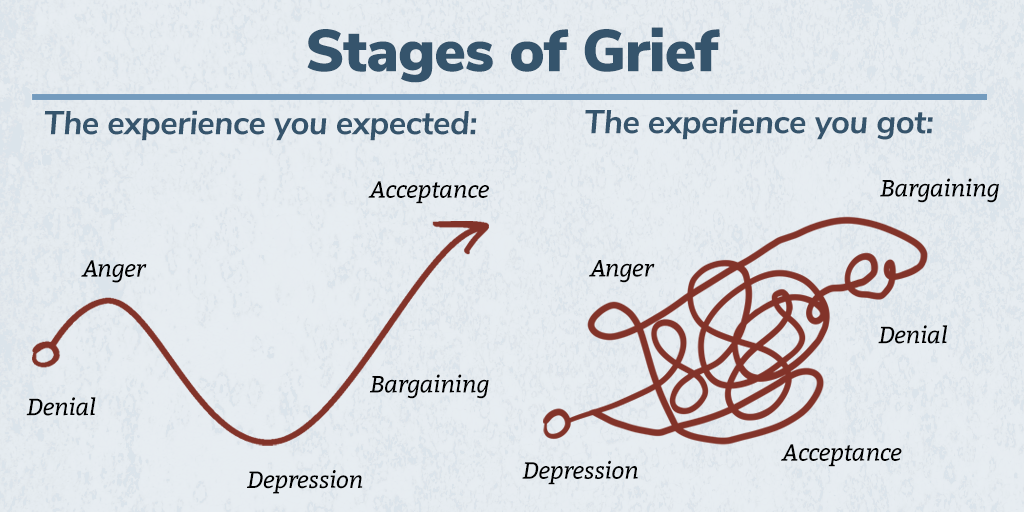
And slowly, the garden did what grief could not—it showed me that healing doesn’t happen overnight. You can’t skip a season when grieving, for the seven stages of grief will appear. Grief will not be ignored any more than persistent weeds in the garden.
That first spring, my broken heart was like a dormant garden, empty and cold, with no signs of life. But beneath the surface, unseen roots were waiting. The first signs of healing were small—like tiny green shoots breaking through the dirt. Some days, progress was invisible, and it felt like I’d never bloom again. Grieving and gardening both take patience.
Gardening requires intentional actions—water, fertilizing, weeding, and tending to new growth. And so does a grieving heart. Planting, nurturing, and watching something flourish outside myself became a quiet form of self-care. With each bulb placed in the ground, I had hope. Each bloom reminded me beauty often follows the hardest seasons.
The garden doesn’t rush. It doesn’t demand. It simply grows, in its own time, in its own way. And over the last five years, so have I.
If you find yourself lost in grief, step outside. Let your hands touch the earth. Bury something in the ground with the faith that it will rise again. And in time, as your garden blooms, so will you.
A deafening silence settled on my soul after I lost love to cancer in 2020. The stillness and loneliness of an unknown wilderness stretched ahead, bringing with it a quiet ache, as life itself was dramatically altered. At first, it felt like a storm, crashing over every part of me, while I wondered if I’d ever truly find my way back. As time moved on, my heart proved its resiliency. It broke, but also healed. Some years later, I found love when least expecting it.
Widowhood later in life is common, but that doesn’t make the pain any easier. Whether experiencing the end of a relationship, friendship, dream, grief leaves its mark. At first, there was deep emptiness as I examined the devastation left behind. I spent days trying to fill that void with a variety of distractions that might make the silence a little less overwhelming.
After a while, it became apparent that no matter how much I tried to fill it, that empty space was still there. That void of emptiness had to heal on its own time. I couldn’t rush past the pain because healing isn’t about avoiding the hurt, but about sitting with it while accepting the lessons that appear.
The journey through loss is different for everyone, but one thing remains the same: you are forever changed. There’s a part of me that will always carry the memories, the lessons, and even the scars from the love I’ve lost. But there’s also a part of me that’s learned how to live again while choosing happiness.
The process of rediscovering myself has been a wild ride. I used to ask myself, “Who am I without VST?” or “What do I truly want from life?” It was a confusing time when my identity was shaken. But, in the chaos of trying to rebuild, I began to understand myself in new ways. I found things that made me happy, new excitement, and worthwhile dreams. I nurtured neglected passions and dreams that’d been put on hold. By God’s grace and mercy, it was through this rediscovery that I found peace again.
Finally, the time was right, and love found its way back to Winterpast. Marriage to HHH doesn’t erase the pain or loss as if it never happened. Instead, it brought a new layer of hope and possibility to life. HHH and I understood the depths of loss, yet still dared to believe in new beginnings. Love is the thing that makes life rich, meaningful, and worth living.
Finding love again, especially after we thought we might never feel it again, is a powerful reminder that life is full of second chances. We’ve experienced such beauty while taking the pieces of who we were and building something new. HHH and I have learned love isn’t just something that happened to us—it’s something we’ve created, nurtured, and something we very much deserve.
Love at this stage in life is different. It’s more mature and rooted in self-awareness. It’s not from a place of need, but from a place of sharing and growth.
And now, you might ask, “Would you choose to do it all again?”
A thousand times, YES. The last 2.5 years have been worth more than gold.
If you’re reading this during your own grief, know that the journey is not where life ends. It’s just the beginning of something new. You will heal. You will grow. And someday, when the time is right, love will find you again—not as a replacement, but as a beautiful reminder that life, no matter how hard, always offers us a chance to love and be loved again.
It’s exactly the thing HHH and I are so lucky to have found.
Everyone has chapters in life that we wish we could rewrite. Moments of regret. Words better not said or those that should have been. Choices that led to unexpected pain. Grief over the loss of a loved one. No matter how much we dwell, overthink, or replay the scenes in our minds, what’s done is done, and we can’t return to those moments.
A favorite saying of mine goes way back to days on the farm. When I wished for a do-over for days gone by, a dear friend would remind me, “You can’t go nowhere on yesterday’s train”. Of course, the improper English is obvious, but that makes the statement all the more striking. We can’t bring back the past no matter how we wish we could.
Have you ever tried to catch a train that left yesterday? No. Of course not. That’s not how trains or time work. Yet, it’s easy to do this with every day problems. Obsessing over yesterday, it’s easy to study it like there’ll be a pop quiz tomorrow.
Chasing after emotional locomotives that have long since pulled out of the station, some cling to the idea that maybe, just maybe, the past can be rerouted. Hence the perfect advice on the subject. You can’t go nowhere on yesterday’s train.
Still, many remain tethered to what was. We carry emotional baggage like a badge of honor that gives control or meaning. But in reality, it’s just added weight. Regrets and grief will mess with your health, sleep, and relationships besides clouding your happiness.
So, how do we begin to accept the past and finally move on?
Acknowledge it. Look for life lessons. Hold onto the good while releasing the bad. Forgive. Focus. And then, move on.
Of course, the past marks our souls. But here’s the deal. Revisiting it over and over doesn’t change a thing. It’s like refreshing a website from 2007 and expecting new content. All you’ll find are regrets and out-dated design choices.
Focusing on the past or future ignores the present. Living in the past can fan the flames of shame, sorrow, and regret. Living in the future can bring anxiety and fear. Meanwhile, the present sits here like a lonely golden retriever with a tennis ball while waiting for you to come play.
So, just let yesterday’s train go on its way.
Stand on today’s platform. Look around and maybe even buy a coffee from the kiosk of mindfulness that only accepts good vibes and exact change as payment. Today is all we’ve got, and it’s worth showing up for. Because, if you spend all your time trying to re-board a train that’s already gone, you’ll miss the one that’s about to leave the station. A fresh, present-moment express headed straight toward joy and growth.
Now go live like today’s train just pulled in with snacks, legroom, and Wi-Fi. The best route is the one leaving right now. If you hurry, you won’t miss it.
There’s something timeless about the soft, melodic sound of wind chimes catching a gentle breeze. Whether hung from a tree limb, a porch overhang, or in the heart of a meditation garden, they bring with them more than just pleasant notes. Carrying a deep, centuries-old tradition, wind chimes offer therapeutic benefits, inviting us to pause, reflect, and, sometimes, snag a great deal while walking the aisles of a local store.
Over thousands of years, wind chimes have danced in the breeze. Originating in ancient China, their sound warded off evil spirits while attracting peaceful energy. In India and Japan, wind chimes in temples promoted a meditative environment, their tones believed to enhance mindfulness and spiritual clarity.
As they made their way across cultures, wind chimes evolved from simple bamboo stalks and shells to finely tuned instruments made from metals, aluminum, and glass. Tuned to specific harmonic scales, high-quality chimes create resonant tones that don’t clash, but layer over one another like the notes of a well-conducted choir.
In memory of a dear church member who passed away in late spring, our congregation decided to take up an offering to purchase wind chimes for our meditation garden. To be more inclusive, the chimes would memorialize all those we’ve lost. After that, things went a little crazy!
The pastor brought two from home to help scout out the most effective place to hang our chimes. Suspended 16′ in the air, on a very old limb of a very old tree, we waited below. Of all the places the Zephyrs zip, we chose the two places they didn’t. So, we continued to search.
In the meanwhile, mysterious advertisements for wind chimes started popping up on our phones. Even though the pastor was the one doing the searching, we all got in on the action.
All wind chimes aren’t created equal. Precisely engineered, harmoniously tuned wind chime tubes produce specific notes that complement each other. This tuning transforms random clatter into a soothing, ambient soundscape. Think of it as the difference between banging on a piano and playing a gentle chord progression. These harmonious chimes create a calm backdrop promoting relaxation, introspection, and presence, especially when installed in a space like a meditation garden.
Of course, the bigger the chimes, the more they cost. Soon, we were looking at an investment of hundreds of dollars to hang chimes where they might get stolen. In the middle of all these decisions, HHH and I were strolling through the aisles of Hobby Lobby, when we ran into the most amazing sale. 66% off all windchimes…… With the money raised, we could now afford the chimes, two memorial plaques, and crushed gravel to spruce up the garden. A win/win all the way around. At that price, Winterpast got a set, too.
The next consideration was placement, which is everything. In a meditation garden, windchimes should be positioned where they can catch a slight breeze just enough to activate their gentle song. High above our tinkling fountain, while suspended from a sturdy limb, they’d be protected from direct rain and theft.
Again the pastor climbed the 20 ft. ladder to find a new home for the chimes. With a little pruning, they’ve found their home. The new wind chimes will invite visitors to slow down, breathe deeply, and stay a bit. After braving the ladder, the meditation garden is now even more peaceful.
Whether turning your backyard into a sanctuary or bringing some harmony to your front porch, the right chimes, hung safely, can transform your environment in subtle, profound ways. So, the next time the wind stirs, listen closely. You may find serenity is only a breeze away.
Last weekend, we met the newest member of our family. A summer fish fry was the perfect time to get everyone together for the big introduction. Grandparents, Great Uncles, and cousins all came together to meet our July Firecracker. He’s the newest person I’ve met in a very long time and the only person I’ve ever known born on the 4th of July.
It’s hard to describe the moment you lay eyes on a soul so fresh to the world. Just two weeks old, he quietly controlled the room in a way only a newborn can. Tiny, still, and oozing softness, he was more powerful than any words or gestures offered.
In a few years, he’ll be helping to catch dinner.
I forgot how tiny babies are. Even though I’ve held a few in my time, the memory of that size fades. The weightlessness of a newborn feels more like holding a feathered thought than a person. With his head barely larger than my hand, his fingers were like delicate threads. His chest rising and falling in barely perceptible rhythm, I wanted to whisper, breathe carefully and not move too much. Of course, his adoring fans went wild with excitement, while he remained unimpressed.
Sleeping the entire time, there were no cries or fussing, just the steady sleep of someone who’s come from somewhere else entirely. Newborn sleep is unlike anything else. There’s a mystery to it, as if they’re still tethered to a world we’ve long since forgotten. You find yourself staring at their face, wondering what their dreams are made of. Whether the tiniest twitch of a lip or the softest sigh, every micro-expression feels sacred.
His dad will coach him well.
What struck me most wasn’t just the baby, but everyone around him. All eyes were fixed on his every move. Everyone wanted their turn to snuggle, but no one asked. A nervous new mom stood inches away, sure that any one of us could break her little miracle. I passed on my turn to cuddle him, as there’s plenty of time for that once his newness wears off.
Normally, there’s a hush that falls over a room with a newborn in it, as if everyone instinctively understands that something miraculous has occurred. In our case, conversations drifted into awe. Laughter softens into smiles. Eyes linger a little longer. Even those big strong Marine-types who don’t normally coo or fuss over babies found themselves marveling at the sheer rightness of this new human.
Perfection in a onesie. Plain and simple. We all agreed the newest little family member is a keeper.
In a world that feels perpetually unfinished and chaotic, a two-week-old baby is complete. He doesn’t need to achieve or perform or prove. His very being is enough. In fact, his existence is a kind of quiet protest against the world’s noise and a reminder that life begins in softness, stillness, and love. It’s easy to forget that we all started that small, silent, and perfect in our helplessness.
Present were five veteran teachers with extensive experience and knowledge about child development through our own children and past students. But now that this unique newborn has dropped in to stay, all that has gone out the window. He’s two weeks old and already teaching us so much without ever saying a word.
If there were one thing I would share with our sweet new mom, it’s this:
Now, hurry up and grow. I can’t wait for a proper hello.
There comes a moment each year when the change in seasons isn’t announced by calendars or clocks, but by the world itself. You don’t need to be told that summer has faded, just trust your senses. As the daily temperatures drop,the transition isn’t loud or demanding, but more like a subtle whisper inviting us to slow down and listen.
Yesterday, the winds were the first to speak. They picked up with a soft and steady edge, bringing the faintest chill signaling change. What once was a warm, lingering breeze now passed briskly, tugging at sleeves and tossing fallen leaves across the yard. Here on the high desert plains of northwestern Nevada, the air itself has grown restless, ready to guide us into a quieter season.
In the distance, the soft clickety-clack of a train travels across the landscape. Its sound is haunting and steady, a reminder of both movement and distance. The train’s whistle, carried on the wind, echoes throughout the desert as a reminder that life is always in motion especially here at the Port of Nevada. There is something deeply comforting about its rhythm, like a heartbeat beneath the hush of autumn’s stillness.
From the porch, the wind chimes respond in their own delicate way. Soft, silvery, and fleeting, their voice never plays the same song twice. Each note rings clear and then drifts into silence, as if the air itself swallows it up. The music feels both fragile and eternal, reminding us that beauty exists in the smallest passing moments. The chimes speak the language of autumn in their quiet, thoughtful, and unhurried way.
And then there is the quiet. The stillness of autumn is not an absence of sound but a fullness. It’s the hush that falls when the world begins to rest. It’s the silence between falling leaves, the train’s distant call, and the notes of the chimes. In that quiet, you become aware of things you might otherwise miss, like the faint rustle of quail in the leaves, the deep breath of the earth cooling itself, or even your own heartbeat slowing in response to the season’s calm.
Our bees are listening to the changes these days. As the hive shrinks in number, the trips to gather nourishment are more purposeful. The hive is doing its best to survive in spite of the odds against it. We pray they have enough of everything needed to make it through the winter.
Autumn teaches patience while us that not everything needs to be rushed or filled. It tells us that pauses have their own beauty, and rest is not the end but a necessary part of the rhythm of life. Just as the trees shed their leaves, we’re invited to let go, listen, and make space for what’s next.
The train in the distance, the wind through the branches, the soft chiming notes, and the growing stillness all weave together into a gentle symphony. Together they sing of endings that aren’t losses, of quiet that isn’t emptiness, and of pauses that are not final. They speak of a world that knows how to move gracefully from one season to the next.
Listen as autumn offers us peace and a chance to notice the beauty in silence, honor the quiet gifts of change, and trust that even in stillness, life continues its steady, faithful rhythm.
A Prayer for the Season
Lord of all seasons, thank You for the gift of change, for the winds that remind us to let go, for the quiet that teaches us to listen, and for the beauty that lingers even in endings.
As autumn settles in, help us to rest in Your presence, to hear Your voice in the stillness, and to carry gratitude in our hearts. May we trust Your rhythm for our lives, just as the earth trusts the turning of the seasons.
It seems like a lifetime ago that HHH and I lifted off on our biggest adventure. We spent most of December on an extensive cruise through five exotic countries we’d only read about, all new to us. But, before we could sail under the Golden Gate, we’d need to fly over the snow-covered Sierra Nevada mountains to San Francisco..
At 4 am, Mr. and Mrs. Lovebird delivered us to an early morning airport scene full of whispered conversations and the clickity-clack of heaving suitcases. Checking in for a flight is different these days, involving computerized kiosks. Upon arrival, we found not one, but two airport angels waiting to help us navigate this new way of travel. Automated to the max, after scanning our phones, we received baggage tags and boarding passes. Everything was so efficient, we were seated at our gate just 20 minutes after our arrival.
During the two-hour wait, I had a quiet conversation with God. Now, let me make this very clear. I LOVE, LOVE, LOVE to fly. Having taken my first flight when I was just 11, it’s the most exciting thing anyone can do. I love every aspect of each flight from beginning to end. But, on every flight, I ask God to surround the airplane with angels. This flight was no different.
Angels. Such an interesting group. They certainly surround us at all times. Who knows? They might pose as a fellow passenger, flight attendant, or stranger. Those small acts of kindness, passing smiles, help with a bag, or calming words that appear at just the right time. It’s hard to tell which ones are human goodness or real angels. I choose to believe it’s a mix of both.
For the flight, HHH and I chose opposing aisle seats. No middleman, just great access to the bathroom and full control of at least one armrest. On the last row of a very small plane, 29B and 29C were in a four-seat row. Expecting a full flight, we’d wait to see just who’d be sitting in 29A and 29D.
My seat remained empty until moments before the door closed. It was then that a lovely young woman asked if she could slip by me. 29A beautiful, but a bit frazzled. She hadn’t flown in 25 years, and things had changed, including the size of the seats. Fiddling with her purse, I learned she was visiting a daughter in Nashville. After that, we both retreated into our own thoughts, mine involving a continued conversation with God about the issue of angels.
29A was a true window gal. She watched every cloud blow by, taking pictures along the short flight while holding her breath during minor turbulence. While in flight, I experienced a quiet sense of peace. We weren’t traveling alone. I could feel it.
And then, we both saw the same thing at the very same time. Outside our window was a “rainbow orb”. It’s the only way I can describe it. Suspended outside the window, it was completely spherical. Not exceptionally large or small, it appeared to be traveling with us.
Before I could even process what I was seeing, she had her phone out, capturing it on video. I asked if I was seeing things. She assured me I wasn’t. Neither of us had ever seen such a thing. The difference was that SHE captured it on video, which she replayed a few minutes later.
It was then she laughed and said she’d asked God to surround the plane with angels. I gasped and told her I had sent the same prayer in exactly the same words. Our eyes met, and we both broke into spontaneous laughter.
After the laughter calmed, a sisterhood had formed. I asked if she would send me the video.
Hmmmmm. She couldn’t find the link.
Wait. WHAT?????? She showed it to me again, but couldn’t find the link. At this point, we were on the ground, and headed for the gate. She allowed me to photograph her Instagram account. (I didn’t write it down, but photographed it.) As the plane came to a stop, we both said “God is Great” at exactly the same time. As our flight ended, more laughter erupted from the back of the plane.
Just like that, a friendship formed. Wheels touched down, bags were grabbed, and our adventure continued. Something inside felt gently changed. I’d seen something unexplainable, and met someone very, very special.
With bags in hand, our adventure began. And what an adventure I have to share with you….
Oh—-BTW—I did look up the Instagram account of 29A. No such person or account could be found, even though I’d photographed her account page. As for rainbow orbs? It could have been an optical illusion. However, it could also be the angel escort requested by the back of the plane. I know what I’m choosing to believe……Just sayin’.
Every so often, even the most majestic specimen in the garden must face the inevitable haircut. This is the year for our banyan-like apricot tree. The birds hold conventions in it as we all consider it shade headquarters. If left unchecked, its lengthy branches were at risk of snapping in the spring winds or due to a heavy crop. Every tree professional who has entered our yard has proclaimed this tree to be an amazing specimen. She’s become our “Bark-Baby”.
As the focal point of the yard here at Winterpast, it’s not something we approached lightly with a pair of Christmas nippers and good intentions. This tree requires strategy, equipment, insurance, and possibly a helmet.
While it’s true that HHH and I own ladders and pruning tools, and we’ve watched videos, we’re also fond of our current level of mobility. There comes a time in responsible homeownership when you ask yourself, “Is this a DIY project… or a hospital co-pay?”
The answer came quickly.
So we summoned our tried-and-true Tree Doctor, Robert, the man who has saved our beloved Russian Olive from certain decline. With assessment, trimming, and nurturing the tree lived to sway another day. Since then, he’s become “our guy.”
An apricot of this magnitude requires more than enthusiasm. It requires someone who understands how to open the canopy for sunlight, how to remove crossing branches, improve airflow, and keep fruit production strong without stripping its dignity.
Professional arborists know things the rest of us guess at:
Which limbs are structurally unsound
How much to remove without shocking the tree
Where to cut so the tree heals properly
How to prevent disease from entering open wounds
How to shape growth for future strength
And most importantly, how to get down from high places without drama
They know all that AND haul away debris.
Have you ever seen the aftermath of major pruning? It looks like a small tornado has thoughtfully organized your branches into piles. There are twigs, limbs, and entire sections that seem large enough to qualify as furniture. If HHH and I attempted this ourselves, we would still be dragging brush to the landfill sometime in July. Heck, by then, we’ll have completed a couple more cruises, which are much more fun than hauling limbs and leaves.
And let’s not forget safety. Large fruit trees can have heavy limbs under tension. One wrong cut and you’re reenacting a scene from an action movie, minus the stunt double. Professionals are trained in proper rigging, ladder positioning, and safe cutting angles. They carry the right equipment and, importantly, the right insurance. Peace of mind is a beautiful thing.
When the crew of six arrived, they walked around the trees with the quiet focus of surgeons preparing for a delicate procedure. They studied the canopy, tilting their heads, while making small nods. Our only request was that we wouldn’t need to wait ten years for the tree to return to its majestic stature.
Soon, branches began to descend in a controlled and dignified manner. Light filtered through spaces that hadn’t seen sunshine in years as the balanced shape of the tree slowly emerged. Strategic pruning isn’t about shrinking a tree, but renewing it.
By the time the crew finished, the yard looked brighter and lighter. The apricot stood dignified rather than unruly. It now commands attention with elegance instead of chaos. Six other fruit trees were groomed, as well.
And best of all? No emergency room visits, loads of brush, or marital debates atop a ladder. Just healthy trees and the comforting knowledge that sometimes the wisest gardener knows when to step aside. The apricot of Winterpast breathes a little easier tonight and so do we.